"Elie regarda et il vit à son chevet un gâteau cuit sur des pierres chauffées ainsi qu’une cruche d'eau. Il mangea et but, puis se recoucha." 1 Rois 19:6
What Does God Tell Us About Technology?
Technology has been an integral part of human cultural activity throughout history.
The Bible tells us of about a number of technologies, some used for good and some for evil:
- Cain built a city (Gen. 4:17)
- In a description of the lineage of Cain, we find Jubal who was "the father of all who play the harp and flute" (Gen. 4:21 NIV) and Tubal-Cain, "who forged all kinds of tools out of bronze and iron" (Gen. 4:22 NIV). Note that bronze is an alloy made from copper and tin, showing a certain sophistication in Tubal-Cain's technology of tools.
- Noah was directed by God to build an ark—a large boat. Using God's direct instructions, Noah designed and built this complex structure. (Gen. 6)
- The tower of Babel was a monument to man's sinful pride, which led God to confuse the languages. (Gen. 11)
- Abraham and Isaac dug wells (an early civil engineering project!) in Genesis 21 and Genesis 26.
- Bezalel is filled with the Spirit of God to build the tabernacle "with skill, ability and knowledge in all kinds of crafts—to make artistic designs for work in gold, silver, and bronze, to cut and set stones, to work in wood, and to engage in all kinds of craftsmanship." (Exod. 31:3–5).
- Aaron fashions an idol in the form of a golden calf using a tool in Exodus 32:4.
- King Solomon builds the temple in 1 Kings 6, and we learn of Huram, who is skilled in bronze work, in 1 Kings 7.
- King Uzziah employs "skillful men" (engineers) in 2 Chronicles 26:15 to design machines to shoot arrows and hurl large stones. However, after Uzziah becomes powerful, his pride leads to his downfall (v. 16).
- Psalm 20 examines human reliance on technology: "Some trust in chariots and some in horses, but we trust in the name of the LORD our God." (Psa. 20:7)
- Isaiah prophesies that the people who go up to the mountain of the Lord will "beat their swords into plowshares and their spears into pruning hooks" (Isa. 2:4)
- Jesus uses technology examples in the Sermon on the Mount and other parables, such as:
- houses in the story of the wise and foolish builders in Matthew 7:24–27.
- city gates in Matthew 7:13–14
- cities and lamps in Matthew 5:14–16
- fishing nets in Matthew 13:47–50
- oil lamps in Matthew 25:1–13
- lost coins in Luke 15:8–10
- Paul communicates with the early churches by letters (which are then copied and distributed)
- Paul speaks of the armor of God in Ephesians 6
- History begins in the garden of Eden (Gen. 2:8) but ends with the Holy City (Rev. 21:2)
So, what might we conclude from the Bible's treatment of technology?
10 Biggest Technology Companies
AAPL, 005930.KS, and HNHPF lead the 10 biggest technology companies list
Updated August 31, 2022 Technology companies have become a dominant driver in recent years of economic growth, consumer tastes and the financial markets. The biggest tech stocks as a group, for example, have dramatically outpaced the broader market in the past decade.1 That's because technology has reshaped in a major way how people communicate, consume information, shop, socialize, and work.
Broadly speaking, companies in the technology sector engage in the research, development, and manufacture of technologically based goods and services. They create software, and design and manufacture computers, mobile devices, and home appliances. They also provide products and services related to information technology.
Below we look at the 10 biggest companies in the technology field, as measured by trailing 12-months (TTM) revenue.
- Apple Inc.
- Samsung Electronics Co. Ltd.
- Hon Hai Precision Industry Co. Ltd.
- Microsoft Corp.
- Dell Technologies Inc.
- Sony Corp.
- International Business Machines Corp.
- Intel Corp.
- Panasonic Corp.
- HP Inc.
This list is limited to companies that are publicly traded in the U.S. or Canada, either directly or through ADRs. The one exception is Samsung, which is far too large to exclude from the list, yet unlike many large companies outside the U.S. does not have an ADR. Some foreign companies may report semiannually, and so may have longer lag times. It's important to note that 6 of the biggest ten are U.S. companies, illustrating America's continued dominance in technology. Two are Japanese, one is South Korean, and one is Taiwanese. None of the biggest companies are from Mainland China. Data is courtesy YCharts.com. All figures are as of May 13, 2020.
Some of the stocks below are only traded over-the-counter (OTC) in the U.S., not on exchanges. Trading OTC stocks often carries higher trading costs than trading stocks on exchanges. This can lower or even outweigh potential returns.
:max_bytes(150000):strip_icc()/resume_profile_4__matt_johnston-5bfc2627c9e77c00517ed813.jpg)
Technology companies have become a dominant driver in recent years of economic growth, consumer tastes and the financial markets. The biggest tech stocks as a group, for example, have dramatically outpaced the broader market in the past decade.1 That's because technology has reshaped in a major way how people communicate, consume information, shop, socialize, and work.
Broadly speaking, companies in the technology sector engage in the research, development, and manufacture of technologically based goods and services. They create software, and design and manufacture computers, mobile devices, and home appliances. They also provide products and services related to information technology.
Below we look at the 10 biggest companies in the technology field, as measured by trailing 12-months (TTM) revenue.
- Apple Inc.
- Samsung Electronics Co. Ltd.
- Hon Hai Precision Industry Co. Ltd.
- Microsoft Corp.
- Dell Technologies Inc.
- Sony Corp.
- International Business Machines Corp.
- Intel Corp.
- Panasonic Corp.
- HP Inc.
This list is limited to companies that are publicly traded in the U.S. or Canada, either directly or through ADRs. The one exception is Samsung, which is far too large to exclude from the list, yet unlike many large companies outside the U.S. does not have an ADR. Some foreign companies may report semiannually, and so may have longer lag times. It's important to note that 6 of the biggest ten are U.S. companies, illustrating America's continued dominance in technology. Two are Japanese, one is South Korean, and one is Taiwanese. None of the biggest companies are from Mainland China. Data is courtesy YCharts.com. All figures are as of May 13, 2020.
Some of the stocks below are only traded over-the-counter (OTC) in the U.S., not on exchanges. Trading OTC stocks often carries higher trading costs than trading stocks on exchanges. This can lower or even outweigh potential returns.
#1 Apple Inc. (AAPL)
- Revenue (TTM): $268.0 billion
- Net Income (TTM): $57.2 billion
- Market Cap: $1.4 trillion
- 1-Year Trailing Total Return: 59.8%2
- Exchange: Nasdaq
Apple designs, manufactures, and markets a broad range of consumer technology products, including smartphones, personal computers, tablets, wearable devices, home entertainment devices, and more. Some of its most popular products include its iPhone smartphones and Mac computers. Apple also has dramatically expanded its sales from services. It operates digital content stores and recently launched several streaming services, including Apple+, a platform for on-demand entertainment content.
- Revenue (TTM): $268.0 billion
- Net Income (TTM): $57.2 billion
- Market Cap: $1.4 trillion
- 1-Year Trailing Total Return: 59.8%2
- Exchange: Nasdaq
Apple designs, manufactures, and markets a broad range of consumer technology products, including smartphones, personal computers, tablets, wearable devices, home entertainment devices, and more. Some of its most popular products include its iPhone smartphones and Mac computers. Apple also has dramatically expanded its sales from services. It operates digital content stores and recently launched several streaming services, including Apple+, a platform for on-demand entertainment content.
#2 Samsung Electronics Co. Ltd. (005930.KS)
- Revenue (TTM): $197.5 billion
- Net Income (TTM): $18.4 billion2
- Market Cap: $325.4 billion3
- 1-Year Trailing Total Return: 17.2%4 3
- Exchange: Korean Stock Exchange
Samsung Electronics competes with Apple and other major tech companies worldwide in key product areas. It's engaged in a broad range of businesses, including consumer electronics, information technology, and communications. The South Korean company sells mobile phones, tablets, wearable devices, virtual reality products, TVs and home theaters, computers, printers, home appliances, and more. Samsung is best known for its popular line of Galaxy smartphones.
- Revenue (TTM): $197.5 billion
- Net Income (TTM): $18.4 billion2
- Market Cap: $325.4 billion3
- 1-Year Trailing Total Return: 17.2%4 3
- Exchange: Korean Stock Exchange
Samsung Electronics competes with Apple and other major tech companies worldwide in key product areas. It's engaged in a broad range of businesses, including consumer electronics, information technology, and communications. The South Korean company sells mobile phones, tablets, wearable devices, virtual reality products, TVs and home theaters, computers, printers, home appliances, and more. Samsung is best known for its popular line of Galaxy smartphones.
#3 Hon Hai Precision Industry Co. Ltd. (HNHPF)
- Revenue (TTM): $173.1 billion
- Net Income (TTM): $3.7 billion
- Market Cap: $36.0 billion
- 1-Year Trailing Total Return: 0.7%2
- Exchange: OTC
Hon Hai Precision, also known as Foxconn, is a Taiwan-based multinational electronics manufacturer. The company produces electronics and electronic components for use in the information technology, communications, automotive equipment, automobile, precision molding, and consumer electronics industries. Foxconn is a key supplier in Apple's supply chain, manufacturing a significant proportion of its iPhones.
- Revenue (TTM): $173.1 billion
- Net Income (TTM): $3.7 billion
- Market Cap: $36.0 billion
- 1-Year Trailing Total Return: 0.7%2
- Exchange: OTC
Hon Hai Precision, also known as Foxconn, is a Taiwan-based multinational electronics manufacturer. The company produces electronics and electronic components for use in the information technology, communications, automotive equipment, automobile, precision molding, and consumer electronics industries. Foxconn is a key supplier in Apple's supply chain, manufacturing a significant proportion of its iPhones.
#4 Microsoft Corp. (MSFT)
- Revenue (TTM): $138.7 billion
- Net Income (TTM): $46.3 billion
- Market Cap: $1.4 trillion
- 1-Year Trailing Total Return: 45.5%2
- Exchange: Nasdaq
Microsoft is a global developer and licensor of software, devices, solutions, and services. The company is well known for its Windows and Office Suite software. The company is getting a growing share of its profit and revenue from cloud computing, and has developed its own cloud platform called Azure. Microsoft also owns and operates LinkedIn, the popular social networking site for job seekers.
- Revenue (TTM): $138.7 billion
- Net Income (TTM): $46.3 billion
- Market Cap: $1.4 trillion
- 1-Year Trailing Total Return: 45.5%2
- Exchange: Nasdaq
Microsoft is a global developer and licensor of software, devices, solutions, and services. The company is well known for its Windows and Office Suite software. The company is getting a growing share of its profit and revenue from cloud computing, and has developed its own cloud platform called Azure. Microsoft also owns and operates LinkedIn, the popular social networking site for job seekers.
#5 Dell Technologies Inc. (DELL)
- Revenue (TTM): $92.2 billion
- Net Income (TTM): $4.6 billion
- Market Cap: $31.2 billion
- 1-Year Trailing Total Return: -37.1%2
- Exchange: New York Stock Exchange
Dell designs, makes and sells hardware, information technology products, and services worldwide. The company offers desktop and laptop computers, traditional and next-generation storage solutions, and networking products. Dell also sells a cloud-native platform and cloud management solutions. Dell's best-known products are its personal computers.
- Revenue (TTM): $92.2 billion
- Net Income (TTM): $4.6 billion
- Market Cap: $31.2 billion
- 1-Year Trailing Total Return: -37.1%2
- Exchange: New York Stock Exchange
Dell designs, makes and sells hardware, information technology products, and services worldwide. The company offers desktop and laptop computers, traditional and next-generation storage solutions, and networking products. Dell also sells a cloud-native platform and cloud management solutions. Dell's best-known products are its personal computers.
#6 Sony Corp. (SNE)
- Revenue (TTM): $79.3 billion
- Net Income (TTM): $6.0 billion
- Market Cap: $80.0 billion
- 1-Year Trailing Total Return: 32.4%2
- Exchange: New York Stock Exchange
Sony is a Japanese technology company that designs and produces electronics products for consumer, professional, and industrial markets worldwide. The company sells products including personal computers, mobile phones, video game consoles and software, and video cameras. It also produces and distributes recorded music, as well as live-action and animated motion pictures. Sony makes and sells PlayStation, the popular video game console.
- Revenue (TTM): $79.3 billion
- Net Income (TTM): $6.0 billion
- Market Cap: $80.0 billion
- 1-Year Trailing Total Return: 32.4%2
- Exchange: New York Stock Exchange
Sony is a Japanese technology company that designs and produces electronics products for consumer, professional, and industrial markets worldwide. The company sells products including personal computers, mobile phones, video game consoles and software, and video cameras. It also produces and distributes recorded music, as well as live-action and animated motion pictures. Sony makes and sells PlayStation, the popular video game console.
#7 International Business Machines Corp. (IBM)
- Revenue (TTM): $76.5 billion
- Net Income (TTM): $9.0 billion
- Market Cap: $106.8 billion
- 1-Year Trailing Total Return: -8.1%2
- Exchange: New York Stock Exchange
IBM is an integrated solutions and services company, also referred to as "Big Blue." The company offers software and IT solutions for a broad range of uses, including healthcare, financial services, Internet of Things (IoT), weather, security, as well as cloud-computing services. The company is known for its powerful Watson computer, which offers a suite of enterprise-ready AI services, applications, and tools.
- Revenue (TTM): $76.5 billion
- Net Income (TTM): $9.0 billion
- Market Cap: $106.8 billion
- 1-Year Trailing Total Return: -8.1%2
- Exchange: New York Stock Exchange
IBM is an integrated solutions and services company, also referred to as "Big Blue." The company offers software and IT solutions for a broad range of uses, including healthcare, financial services, Internet of Things (IoT), weather, security, as well as cloud-computing services. The company is known for its powerful Watson computer, which offers a suite of enterprise-ready AI services, applications, and tools.
#8 Intel Corp. (INTC)
- Revenue (TTM): $75.7 billion
- Net Income (TTM): $22.7 billion
- Market Cap: $247.2 billion
- 1-Year Trailing Total Return: 29.3%2
- Exchange: Nasdaq
Intel is a premier global producer of computer chips and a provider of computing, networking, data storage, and communication solutions. The company offers platform products for the cloud, enterprise, and communication infrastructure markets. Intel provides flash memory, programmable semiconductors, and processors for notebooks, mobile devices, and desktop computers. The company is well known for its high-performance processors used in PCs worldwide by businesses and consumers.
- Revenue (TTM): $75.7 billion
- Net Income (TTM): $22.7 billion
- Market Cap: $247.2 billion
- 1-Year Trailing Total Return: 29.3%2
- Exchange: Nasdaq
Intel is a premier global producer of computer chips and a provider of computing, networking, data storage, and communication solutions. The company offers platform products for the cloud, enterprise, and communication infrastructure markets. Intel provides flash memory, programmable semiconductors, and processors for notebooks, mobile devices, and desktop computers. The company is well known for its high-performance processors used in PCs worldwide by businesses and consumers.
#9 Panasonic Corp. (PCRFY)
- Revenue (TTM): $70.4 billion
- Net Income (TTM): $2.6 billion
- Market Cap: $17.4 billion
- 1-Year Trailing Total Return: -10.6%2
- Exchange: OTC
Panasonic is a Japan-based developer, manufacturer, and servicer of electronic products primarily for the consumer market. The company offers personal computers, tablets, projectors, as well as broadcast and professional AV systems. Panasonic also produces appliances such as air conditioners, TVs, refrigerators, and washing machines.
- Revenue (TTM): $70.4 billion
- Net Income (TTM): $2.6 billion
- Market Cap: $17.4 billion
- 1-Year Trailing Total Return: -10.6%2
- Exchange: OTC
Panasonic is a Japan-based developer, manufacturer, and servicer of electronic products primarily for the consumer market. The company offers personal computers, tablets, projectors, as well as broadcast and professional AV systems. Panasonic also produces appliances such as air conditioners, TVs, refrigerators, and washing machines.
#10 HP Inc. (HPQ)
- Revenue (TTM): $58.7 billion
- Net Income (TTM): $3.0 billion
- Market Cap: $21.3 billion
- 1-Year Trailing Total Return: -19.5%2
- Exchange: New York Stock Exchange
HP makes and sells products used for personal computing, imaging and printing, as well as related technologies, solutions, and services. The company offers personal computers, workstations, commercial mobility devices, retail point-of-sale systems, and software. HP is perhaps best known for its printer hardware and scanning devices used by consumers and businesses globally.
SPONSORED
- Revenue (TTM): $58.7 billion
- Net Income (TTM): $3.0 billion
- Market Cap: $21.3 billion
- 1-Year Trailing Total Return: -19.5%2
- Exchange: New York Stock Exchange
HP makes and sells products used for personal computing, imaging and printing, as well as related technologies, solutions, and services. The company offers personal computers, workstations, commercial mobility devices, retail point-of-sale systems, and software. HP is perhaps best known for its printer hardware and scanning devices used by consumers and businesses globally.
Glorify, an ambitious app for Christians, just landed $40 million in Series A funding led by a16z
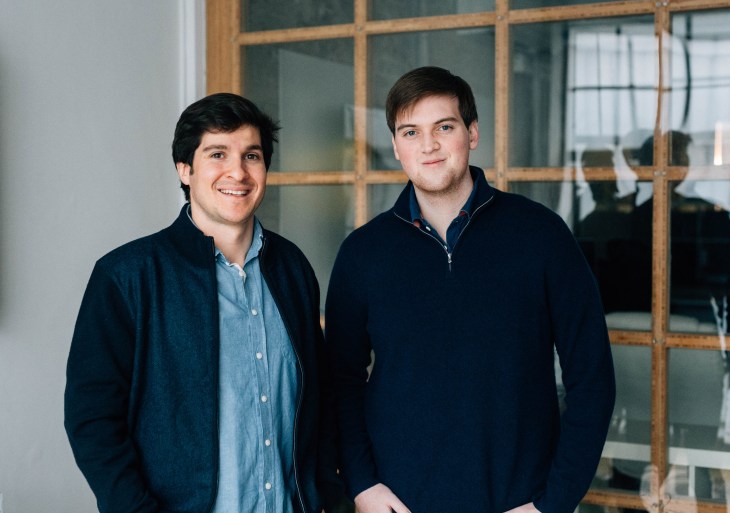
Image Credits: Glorify
Religion-based apps, tools and communities aren’t brand new, including to investors. Pray.com, for example, an LA-based app for daily prayer and bedtime Bible stories that was founded in 2016, has raised at least $34 million from investors, including Kleiner Perkins. Ministry Brands, a nine-year-old, Knoxville, Tennessee-based outfit that now includes dozens of software and payments brands tailored to faith-based organizations, was acquired in 2016 for $1.4 billion by Insight Partners (which is reportedly now looking to flip it).
Still, fueled by a pandemic that drove churches to close, faith-based apps and communities are growing faster than ever — the most popular, Bible app, is now on more than 400 million devices worldwide — and getting more notice as a result.
The newest of these is Glorify, a two-year-old, 60-person, subscription-based “well-being” app that offers users guided meditation, along with audio bible passages and Christian music. The London-based outfit just raised $40 million in Series A funding led by Andreessen Horowitz, with participation from SoftBank Latin America Fund, K5 Global and a long string of famous individuals, including Kris Jenner, Corey Gamble, Michael Ovitz, Jason Derulo and Michael Bublé.
We talked yesterday with its 22-year-old co-founder and co-CEO, Ed Beccle, who says he spends up to a third of his time in São Paulo, and who recently sold his previous company for what he describes as a “multimillion-dollar” exit. Indeed, he says he dropped out of high school at age 16 to work on his startups.
Perhaps unsurprisingly, during our conversation, he laid out a vision that extends well beyond meditation and Bible readings. He also offered a peek into how wealthy celebrities and startup entrepreneurs are being brought together. Excerpts of that chat follow, edited lightly for length.
TC: You say this is your third or fourth startup. With Glorify, did you see an opportunity or are you a religious person or is it a combination of both things?
EB: I think definitely a combination of both. It’s hard not to get a little bit philosophical when you’re young, and you’re doing exciting things, [and] maybe you make more money than regular people your own age. For me, at least, I stopped and thought, ‘Well, I can afford all the Ubers and Uber Eats in the world, and I don’t really spend any other money. I don’t have a mortgage or dependents. What would I do if I could do anything?’
[The answer] has always been working on tech that changes the way people think and feel. That’s what I’m kind of obsessed with. . . Now I’ve never been more proud of anything in my life than this company because it is so much more than just a business. I’ve come at it from from a lot of different angles and one is very much on an emotional level and my own beliefs around faith. Then the other is: It’s the most incredible commercial opportunity. It’s going to be, I think, far bigger than people realize.
TC: You have a pretty interesting syndicate of investors. How did that come together?
EB: I think it came together a bit like everything that I’ve done, which is just, you know, by my continually trying and chatting to as many people as I can and putting myself in a lot of awkward situations sometimes to get in front of the right people. In terms of the celebrity elements, I have to say that that was a shock. [Former Hollywood agent turned founder of K5 Global] Michael Kives has been a complete hero on this front; he sent me a message that said, ‘Are you free’ on whatever the date was. ‘I want you to come to dinner with me and the Kardashians’ and there were probably 25 people on the guest list that he sent over, and I’m not sure there was a single person aside from myself and one other who wasn’t an A-lister. Like, it was crazy. I walk through the door, and there was Michael [Bublé] and Jason Derulo, and, I mean, what you see on the press release is literally the tip of the iceberg. We’ve only released some of the names.
It comes down to: Why have we done it? Why have I tried so hard to get a lot of these people involved? It’s because we’re trying to create a cultural movement around faith and making believing in God and something greater something that’s more than just okay [and into] something that can really change your life. My goal with all of these people is to get them to make Glorify the medium that they talk about their faith through.
TC: Can you talk about some of the business metrics that made these people decide to commit to the venture?
EB: We’re averaging at least 250,000 people daily and we’ve had now 2.5 million downloads over the last year or so. I think things have really kicked off in the last six months to be honest, and what’s so exciting is that a lot of this growth has been semi organic. It’s not from viral K factor that exists within the app. We always thought it was too early to start introducing stuff like that.
TC: Is the plan to evolve this into a full-fledged social network?
EB: When we talk about it being a social network, 100%. It’s just that trying to look at social very differently. We want to optimize for very different things. I want to be building tight-knit engaged communities that are really meaningful and purpose-led, rather than things that are mass, superficially engaged, which is really the trap of social today. We don’t monetize through ads; the user really isn’t the product. We want to bring people closer together and not necessarily in huge groups but through amazing micro interactions that can exist and bring you closer to a small group of people who you really care about.
TC: Are you close to break-even at this point?
EB: Definitely not, but it’s very intentional. We’ve proven paid conversion, which we’re really happy about . . . I believe the engaged audience that we will have will probably have a higher propensity to pay for all sorts of other products that we release. That cool daily worship product will [continue to] be in the Glorify app, although far improved, even in over the next few months, but [we think we can] take that audience and direct them to other products that we’ve created, where they’ll have high propensity to pay.
TC: Are you talking about virtual tithing? Bible study?
EB: An example would be in in Christian dating. It’s an amazing, huge space, but anyone who really tries to build within it has to become kind of a Christian Tinder, using visuals to be the primary way you match people. I don’t know if that’s really the right way to go about it. Instead, you know, if you’re a user of Glorify, we’ll be able to match you with people based on shared beliefs [and] your engagement with the Bible [and] all sorts of things where we have almost a competitive advantage over anyone else because of the product that we’ve begun with.
Pictured above: From left to right, Henry Costa and Ed Beccle, co-CEOs of Glorify. The two met at a co-working space when Costa was doing angel investing in London. According to Beccle, they instantly hit it off and he asked Costa if he would be his co-founder at their previous company. They later co-founded Glorify.
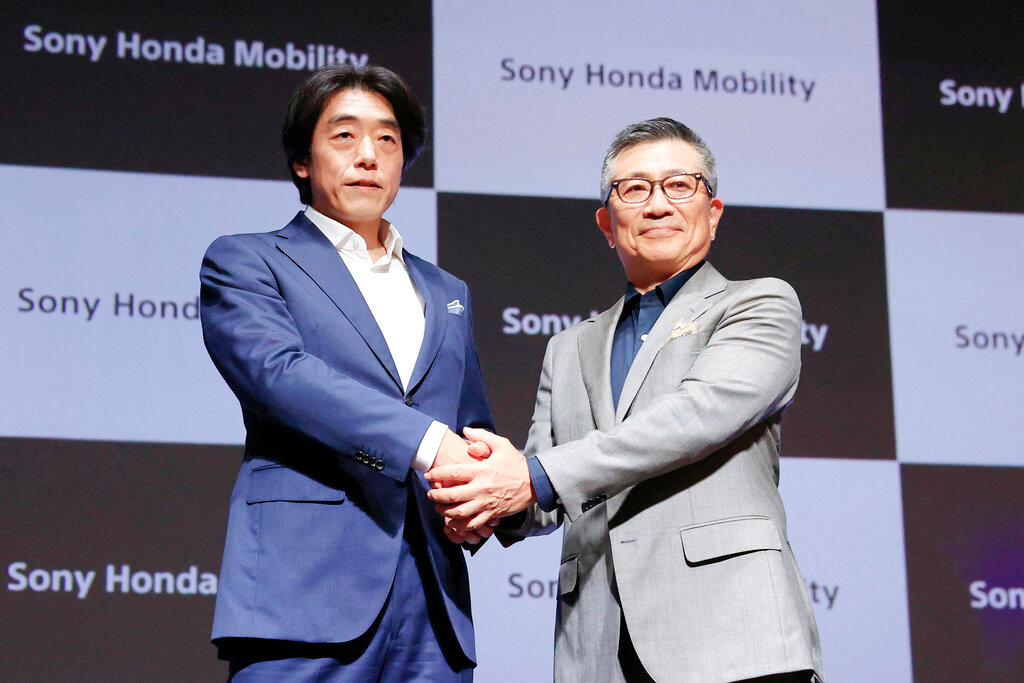
TOKYO (AP) — A new electric car company that brings together two big names in Japanese business, Honda and Sony, has officially kicked off. The companies say they share common values of taking up challenges and serving people’s needs. The electric vehicle from Sony Honda Mobility will go on sale in 2025, with deliveries coming first in the U.S. in early 2026, and in Japan later that year. Pre-orders start 2025.

Delta Air Lines is posting a $695 million profit for the third quarter, which includes much of the peak summer travel season. Delta said Thursday that it expects its fourth-quarter revenue will be higher than the comparable figure from 2019, before the pandemic. Delta's bottom line is getting a boost from higher average fares and a lucrative credit-card business.

WASHINGTON (AP) — Millions of Social Security recipients will get an 8.7% boost in their benefits in 2023. That’s a historic increase and welcome news for American retirees and others — but it’s tempered by the fact that it’s fueled by record high inflation that’s raised the cost of everyday living. that means the average recipient will receive more than $140 a month extra beginning in January.

NEW YORK (AP) — Tens of millions of older Americans are about to get what may be the biggest raise of their lifetimes. On Thursday, the U.S. government is set to announce what's virtually certain to be the largest increase in Social Security benefits in 40 years. The boost is meant to allow beneficiaries to keep up with inflation, and how it's generated stirs plenty of controversy.

MOSCOW (AP) — Russian President Vladimir Putin says that Moscow is ready to resume gas supplies to Europe via a link of the Germany-bound Nord Stream 2 pipeline under the Baltic Sea. Putin told an energy forum in Moscow on Wednesday that the U.S. was likely behind the explosions that ripped through both links of the Nord Stream 1 pipeline and one of the two links of the Nord Stream 2 pipeline.

DAKAR, Senegal (AP) — European leaders are turning to Africa for more natural gas as they try to replace Russian energy amid the war in Ukraine. While Africa’s natural gas reserves are vast and North African countries like Algeria have pipelines already linked to Europe, a lack of infrastructure and security challenges have long stymied producers in other parts of the continent from scaling up exports.
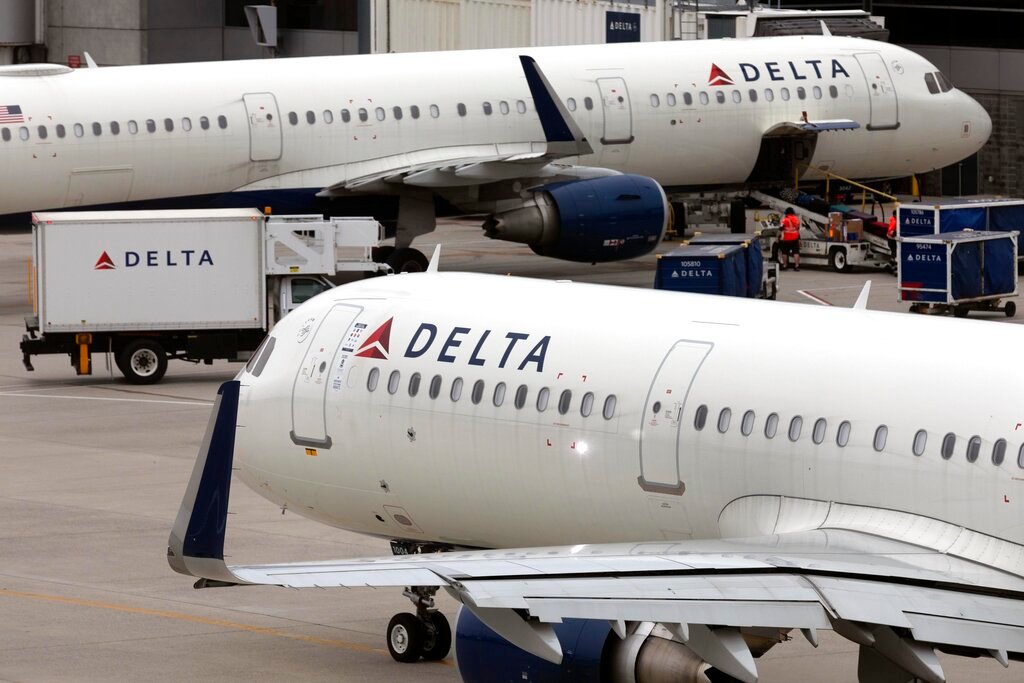
ATLANTA (AP) — Delta Air Lines says it's investing $60 million in a startup that hopes to build electric helicopter-like air taxis to ferry passengers to the airport. Delta announced Tuesday that it could invest up to another $140 million in Joby Aviation as the manufacturer hits key milestones. Joby is among several companies working on electric-powered aircraft that take off and land vertically, like helicopters.

OMAHA, Neb. (AP) — The U.S.'s third largest railroad union rejected a deal with employers Monday, renewing the possibility of a strike that could cripple the economy. Both sides will return to the bargaining table before that happens. Over half of track maintenance workers represented by the Brotherhood of Maintenance of Way Employes Division who voted opposed the five-year contract despite 24% raises and $5,000 in bonuses.
WASHINGTON (AP) — America’s employers slowed their hiring in September but still added a solid 263,000 jobs — a dose of encouraging news that may mean the Federal Reserve’s drive to cool the job market and ease inflation is starting to make progress. Friday’s government report showed that last month’s job growth was down from 315,000 in August and that the unemployment rate fell to 3.5%.
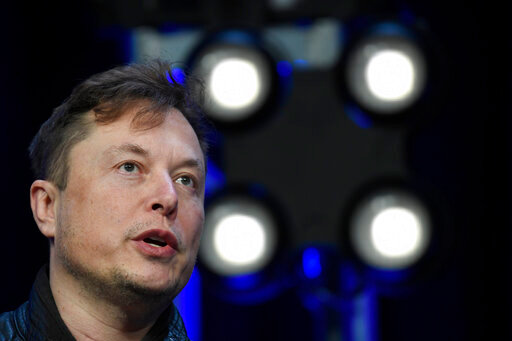
If the squabbling ever stops over Elon Musk’s renewed bid to buy Twitter, experts say he still faces a huge obstacle to closing the $44 billion deal: Keeping his financing in place. Earlier this week Musk reversed course and said he’d go through with acquiring the social media company under the same terms he agreed to in April. But after months of tweetstorms and legal barbs, there are scars and suspicions on both sides.


No comments:
Post a Comment